
What is a PLR Course?
If you’ve ever wanted to know what is a PLR Course, then this is the right article for you. Have you ever wished you could launch an online course in a weekend instead of a year? PLR course is the closest thing you’ll get.
A PLR course (Private Label Rights course) is a ready‑made online course that you buy with a special license that lets you edit, rebrand, and resell it as your own. In plain English: someone else does the heavy lifting, you legally put your name on it, improve it, and keep the money.
These done for you courses sit at the heart of many modern digital businesses. Coaches, course creators, agencies, solo entrepreneurs, and even SaaS companies use PLR online courses to fill gaps in their product line, build email lists, or add bonuses to higher‑ticket offers. They like PLR because it saves time, cuts production cost, and shortens the distance between “idea” and “live offer.”
When used well, a private label rights course can become a real asset in a broader digital product business. You can sell PLR courses, bundle them with templates, or turn them into mini‑memberships that bring in passive income over and over.
In this guide, we’ll walk through what a PLR course is, how licenses work, how to customize them so they stand out, how to price and sell them, and how platforms like Shopify, WordPress, and EasyElementor fit into the picture.
Get your own PLR Done for you Courses: PLR Courses
Learn more about: How to Make Money Online With PLR Courses
From Our Case Studies: What Is a PLR Course in Real Life?
On Reddit, people often discover PLR when they stumble across “free done‑for‑you course” deals or bundles that come with resell rights. One popular thread broke down a Systeme.io PLR package that gave access to eight video courses on topics like email marketing and high‑ticket sales, plus lead magnets, email swipes, and funnels. That’s a textbook example of a PLR course bundle: content, assets, and marketing tools in one pack.
In another Reddit discussion, a creator considered uploading generic PLR video courses straight to Udemy as a course. An experienced marketer jumped in and warned that most raw PLR ranges from “junk to marginally decent,” and that uploading it unchanged usually leads to poor reviews or no sales at all. The advice was clear: treat PLR as a starting point, not a shortcut to skip quality.
So when we talk about what is a PLR course, we’re not talking about magic money. We’re talking about a framework plus license you can use to move faster—if you’re willing to customize, improve, and market it like a serious product. That’s the mindset we’ll use through this entire guide.
What Does PLR Mean? Understanding Private Label Rights
At its core, Private Label Rights is just a type of copyright license applied to digital products like courses, ebooks, and templates. You don’t buy the copyright itself, but you do buy a bundle of permissions that are far more generous than a standard personal‑use license.
Private label rights meaning (in simple words)
With a PLR license, you usually can:
- Edit and re‑write the content.
- Put your own name and brand as the author or instructor.
- Repackage content into other digital products (e.g., turn modules into a workshop).
- Sell access to the course and keep 100% of the revenue (subject to the license rules).
Unlike a custom ghostwritten course, PLR is non‑exclusive. The creator can sell the same PLR content to many buyers, and everyone gets similar rights unless the seller clearly limits quantity.
Because licenses vary a lot, you should always read the specific PLR license terms. Some allow you to give away the content for free, some forbid free distribution, and others ban selling on certain platforms entirely.
Learn more about PLR: What are PLR Products?
From Our Case Studies: How People Misunderstand PLR Licensing
On Reddit, we see two common mistakes around PLR digital products. First, beginners often assume PLR means “I own this like I wrote it from scratch,” which isn’t true; copyright still belongs to the original creator, and your rights are based on the license text, not your feelings. Second, people skip reading the license because “it looks boring,” then get surprised when a marketplace takes their listing down.
In legal breakdowns of MRR/PLR businesses, lawyers repeatedly stress the need to understand what you can and can’t do with each type of license: what edits are allowed, whether you can claim full authorship, and where you’re allowed to sell. That matches the stories we see on Reddit, where sellers run into trouble by trying to pass along rights they never actually received.
So our in‑house “VFX rule” for PLR licenses is: Verify, Freshen, Cross‑reference (VFX). Verify the license by reading it end‑to‑end; freshen your understanding by checking a second trusted explanation; and cross‑reference big decisions (like selling on a large marketplace) with the platform’s own policies before you launch.
What Is Included in a PLR Course?
Most PLR course materials go far beyond a simple video file. A good ready made online course tends to include content for students, content for you as the instructor, and content for marketing.
Exactly what you get depends on the provider, but most full course content templates include four big buckets.
Course Modules and Lessons
At the core of any PLR course you’ll find:
- Video lessons – Screen‑recordings, slide narrations, or talking‑head videos.
- Course modules – A clear structure of sections or weeks for learners.
Some providers offer both video and text versions, others give you raw slide decks that you can narrate yourself.
Downloadable Resources
To make implementation easier, quality PLR courses often ship with:
- Worksheets for reflection or exercises.
- Workbooks that bundle several worksheets into a guided learning path.
- Templates (e.g., email scripts, planners, checklists).
These student‑facing assets increase completion rates and make your offer feel more premium than “just videos.”
Marketing Assets
Many high‑end PLR providers know their buyers aren’t just teachers; they’re marketers. So you’ll often see:
- Sales pages (copy and layout suggestions).
- Email swipes to promote the course or nurture leads.
- Promotional graphics for social media and ads.
In some PLR bundles, like the Systeme.io example discussed on Reddit, you even get funnels, lead magnets, and sales scripts designed to plug right into your tech stack.
Editable Content Files
To make editing easier, serious ready made online courses come in editable formats, such as:
- PowerPoint slides or Keynote decks.
- Word or PDF documents for workbooks and outlines.
- Canva graphics and other drag‑and‑drop design files.
Having editable source files turns the course into true course content templates rather than a locked product you can’t adjust.
From Our Case Studies: What Real PLR Buyers Actually Use
In Reddit and creator communities, people rarely use everything in a PLR package, even when it’s huge. One thread about a PLR bundle with multiple courses plus funnels showed that most users cherry‑picked: they used the lead magnets and email swipes as‑is, but heavily re‑recorded or rewrote the core lessons.
Another Reddit creator who tried to upload PLR content to Udemy found that the raw videos felt flat and generic. Their turning point came when they kept the course modules as a skeleton but replaced the videos with their own screen‑recordings, plus added custom worksheets that matched their teaching style.
So while PLR sellers might brag about “300+ assets,” our experience says that your best results come from focusing on a few strong elements—usually the structure, the workbooks, and the marketing copy—and then layering your own voice on top.
How PLR Courses Work
At a high level, how PLR courses work looks simple:
- You buy a course with a PLR license.
- You customize and rebrand it.
- You upload it to a platform (your site or a PLR course marketplace).
- You sell access and keep the profit, within the license rules.
Let’s break that down.
Step 1: Purchase a PLR Course
You can buy PLR courses from:
- Dedicated PLR course sites like Content Sparks, PLR.me, Tools for Motivation, and Uthena.
- Broader PLR product memberships that include courses, ebooks, and templates.
- Hybrid platforms or marketplaces like Entrepedia, which specialize in high‑quality PLR bundles.
Each provider has its own angle—some focus on self‑help and coaching, others on business and marketing.
Step 2: Customize and Rebrand the Course
Once you’ve purchased, you:
- Add your logo and colors.
- Rewrite parts of the script or slides in your own words.
- Insert your stories, case studies, and examples.
- Adjust the structure for your audience (shorter modules, more examples, etc.).
This is where customize PLR courses turns into “make PLR content unique.”
Step 3: Upload the Course to a Platform
You can host your course on:
- WordPress with LMS plugins or checkout tools like Easy Digital Downloads, often enhanced with Elementor or similar builders.
- Hosted course platforms (Thinkific, Teachable, etc.).
- Shopify using course apps for digital delivery.
- Membership websites that gate content behind recurring subscriptions.
You’ll generally connect payments via PayPal, Stripe, or local gateways supported by your platform.
Step 4: Sell the Course and Keep 100% Profit
If your PLR course business follows the license, you usually:
- Set your own price.
- Keep 100% of each sale (minus payment processor fees).
- Decide whether to sell as a one‑off, bundle, or inside a membership.
That’s why creators love to sell PLR courses—once you do the initial customization and setup, each extra sale costs almost nothing.
From Our Case Studies: The “Too Good to Be True” Moment
In the Systeme.io Reddit thread, the OP shared a deal that looked almost unreal: eight video courses with resell rights, lead magnets, email swipes, and funnels, unlocked just by subscribing to a plan. Commenters quickly pointed out the catch: “It’s not a get‑rich‑quick scheme. You still need to market and sell these courses.”
Another Reddit user tried the “upload PLR and hope” approach on Udemy, only to see poor traction. Seasoned creators replied that PLR is leverage, not autopilot: you must upgrade the content and build trust if you want repeat buyers and low refund rates.
So in our internal playbook, how PLR courses work isn’t “buy, upload, profit.” It’s “buy, upgrade, distribute, optimize.” The money doesn’t come from the license itself; it comes from how well you execute on branding, tech, and marketing once the course is in your hands.
PLR vs MRR vs Resell Rights (Important Differences)
This part trips up a lot of beginners, and many competitor blogs barely skim it. Let’s fix that.
There are three main rights you’ll see with digital products:
- PLR (Private Label Rights)
- MRR (Master Resell Rights)
- Basic Resell Rights
Sources like LegalDoer and digital licensing guides define them roughly like this:
- PLR – You can usually edit, rebrand, and sometimes grant certain rights to your buyers.
- MRR – You can resell the product and pass on resell rights to your customers, but often without editing.
- Resell Rights – You can resell the product as‑is, but your customers cannot resell it again.
Here’s a simple comparison.
Learn more about: MRR vs PLR
License Rights Table for Courses
| License Type | Can Edit Content? | Can Resell? | Can Pass Resell Rights? |
|---|---|---|---|
| PLR | Yes (usually) | Yes | Sometimes (depends on license) |
| MRR | Usually No (sell as‑is) | Yes | Yes |
| Resell Rights | No (sell as‑is) | Yes | No |
Because PLR vs MRR vs basic resell rights can radically change what you’re allowed to do, never guess. Always read the license.
From Our Case Studies: When the Wrong Rights Kill a Launch
On Reddit, we see people buy what they think are master resell rights courses, only to discover they actually bought simple resell rights with no permission to pass rights forward. That one misunderstanding can ruin an entire funnel built around “sell this and let your buyers resell it too.”
We also see the opposite: creators purchase PLR courses but then treat them like basic resell rights, never editing the content or branding them as their own. They leave value on the table because they don’t realize PLR allows deep customization.
When we apply our VFX rule here—Verify, Freshen, Cross‑reference—we check three things before building a funnel:
- Verify what the license actually says about editing and reselling.
- Freshen our understanding by cross‑checking a second article or legal explainer on PLR vs MRR.
- Cross‑reference the plan with the marketplace’s own TOS (for example, some platforms don’t want generic PLR uploaded at all).
If a single piece doesn’t line up, we treat that product as off‑limits for complex plr course business models.
Benefits of PLR Courses
Used well, PLR online courses can give you an unfair advantage versus trying to build every course from zero.
Saves Time Creating Courses
Creating a full course from scratch can take weeks or months. With PLR, you skip the blank‑page stage and start from a complete outline, script, and assets. That lets you launch more offers in less time and respond faster to trends.
Low Startup Cost
High‑quality custom production (scriptwriting, design, video editing) is expensive. By using PLR digital products, you effectively share those creation costs with other buyers, so your entry price is much lower than hiring a team.
Easy to Rebrand
Because PLR comes with editable files, you can match the course to your brand colors, fonts, and tone without hiring a full agency. You can even blend PLR with your own white label courses or templates to create a unique product line.
Passive Income Opportunity
Once customized and set up on your site or course platforms, the same course can sell thousands of times with little extra work, especially if you feed it traffic from content, email, or paid ads. That’s where passive income courses and ready made courses to sell start to make sense as a long‑term asset, not a quick flip.
From Our Case Studies: Why Buyers Keep Coming Back to PLR
Reddit stories around PLR are mixed—but the people who stick with it share something in common. They treat ready made courses to sell as building blocks. One marketer described using PLR as the “bones” of their funnel; they saved weeks of work on outlines and basic slides, then used the saved time to improve their copy and ads.
Creators who depend on digital entrepreneurship also mention the portfolio effect: instead of trying to craft one perfect flagship course, they launch multiple smaller passive income courses using PLR as a base. A few duds don’t hurt much, but the winners keep selling for months or years.
Across these stories, one theme stands out: PLR reduces friction. It doesn’t remove the need to market or serve your customers, but it clears the hardest hurdle—getting something publishable in front of people fast.
Potential Downsides of PLR Courses
No honest guide should pretend PLR is perfect. There are real risks and limitations.
Content Duplication
Because PLR is non‑exclusive, many people can sell similar or identical content. That can create content duplication and lower perceived value if you use the course without edits, especially on big platforms where buyers compare multiple listings.
Quality Differences
PLR quality ranges from world‑class to “I wrote this at 2 a.m. in 2009.” Many large catalog memberships prioritize quantity over quality, which is why experienced marketers warn that most PLR is junk unless you choose carefully.
Oversaturation
Some niches—like generic “make money online” or very broad self‑help—get hammered with similar done for you courses, which can make it harder to stand out if you don’t add your own angle or bonuses.
Licensing Restrictions
Each seller writes their own plr license terms, and some ban selling on certain platforms, giving away the course for free, or passing on rights to your customers. Ignore those rules and you risk refunds, bans, or even legal headaches.
From Our Case Studies: When PLR Backfires
On Reddit, creators share painful stories where PLR course disadvantages show up in real life. One user uploaded a PLR course to a marketplace and quickly got poor reviews because the videos felt generic and outdated; they hadn’t checked how old the content was before buying.
In the Systeme.io PLR thread, commenters warned that the “everyone can get this” nature of the bundle means competition might be fierce if you don’t differentiate. If a thousand people run the same funnel with the same copy, only the most skilled marketers win.
These stories shape our view on are PLR courses worth it: they can be, but only if you treat quality control, customization, and license compliance as non‑negotiables—not as optional extras.
How to Customize a PLR Course to Make It Unique
If you remember only one section, make it this one. Customization is where edit PLR courses turns into a real brand asset.
Rewrite Course Modules
Start by rewriting the intros, transitions, and explanations in each module using your own voice. Keep the core ideas but change:
- Examples and stories.
- Phrasing and jokes.
- Order of points if it clarifies the flow.
This makes it much harder for buyers to recognize that the content started as PLR.
Add Additional Lessons
Insert bonus lessons based on questions your audience asks all the time. If the PLR course teaches email marketing, add a lesson on your favorite subject line frameworks or show your own campaign breakdown.
Record Your Own Videos
Even if you keep the PLR slides, recording your own voice and screen instantly increases uniqueness and trust. It also helps platforms like Udemy or Skillshare see the course as your work instead of a clone.
Combine Multiple PLR Courses
One underused move: merge two or three related PLR online courses and trim overlaps to create a deeper “signature” program. For example, combine a mindset PLR course with a strategy PLR course for a specific niche.
Add Bonuses and Templates
Stack your offer with:
- Checklists reflecting your exact workflow.
- Templates built in tools like Canva, Notion, or Google Sheets.
- Q&A calls or office hours for live support.
This not only makes PLR content unique, it also supports higher pricing.
From Our Case Studies: Customization That Actually Works
Our favorite Reddit case studies line up with the same pattern. One entrepreneur bought a mid‑tier PLR course, realized the videos weren’t great, and used them only as rough prompts. They kept the course modules but re‑recorded every video, wrote new case studies for each lesson, and added templates taken from their client work.
Another creator described taking a PLR funnel bundle and swapping every example for one niche (fitness coaches), then adding a bonus mini‑course on “how to promote this course using Reels,” which immediately made their version feel tailored and up‑to‑date.
These experiences match our VFX rule. We verify the PLR outline is solid, freshen it with our current knowledge and tools, and cross‑reference with audience feedback as we build. The end result doesn’t feel like PLR anymore; it feels like a niche digital course business built on a strong starting framework.
Where to Buy PLR Courses
Now let’s look at where to actually find PLR courses for sale, what top sites do well, and where they fall short.
Best PLR Course Websites (and What They Miss)
Based on recent reviews and round‑ups of PLR providers:
These platforms are excellent sources for buy PLR courses, but most still leave gaps: little hands‑on help with funnels, limited design assets, and not much guidance on launch strategy.
Why EasyElementor Can Be a Great Source for Done‑For‑You Courses and Digital Products
EasyElementor positions itself more as a digital resources marketplace than a pure PLR course library, but that’s exactly why it’s powerful for done for you digital products. It offers access to a massive collection of templates, themes, and assets you can plug into your WordPress or Elementor‑based sites.
A typical EasyElementor‑style bundle includes:
- Thousands of WordPress templates, landing pages, and page designs.
- A huge pack of graphics, ebooks, and digital assets you can brand and incorporate into your offers.
- Tools that pair nicely with plugins like Easy Digital Downloads to build smooth digital product checkouts.
Where many PLR sites stop at “Here’s the content,” EasyElementor‑type bundles help you actually implement: you get the course plus landing pages, site themes, and graphics you need to launch a store quickly.
EasyElementor PLR Done For You Course Collection
-
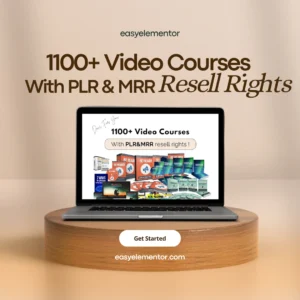
1100+ Awesome Business Courses MRR & PLR Bundle
Original price was: $ 97.00.$ 12.00Current price is: $ 12.00. -
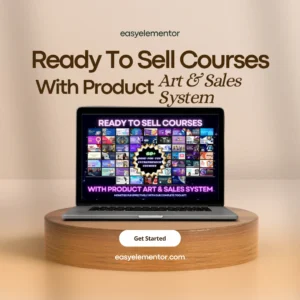
60+ PLR Video Courses Digital Product – Done-For-You Entrepreneur Niche, DFY Funnels, Customizable Product Art Templates – Resell Ready
Original price was: $ 89.00.$ 12.00Current price is: $ 12.00. -
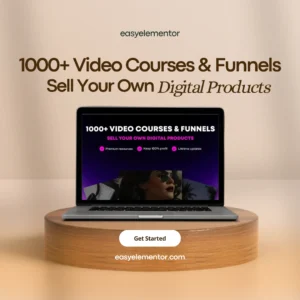
1000+ PLR Video Courses | MRR, PLR, Resell Rights
Original price was: $ 89.00.$ 12.00Current price is: $ 12.00. -
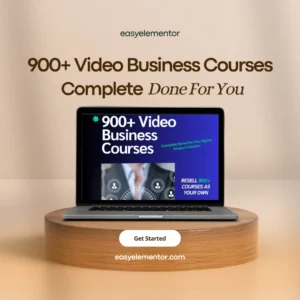
900+ Business Courses Bundle | MRR, PLR, Resell Rights | Digital Business, Video Courses, Marketing Courses, Dropshipping Courses, Courses.
Original price was: $ 87.00.$ 12.00Current price is: $ 12.00. -
PLR Coloring Pages | Adults & Kids Coloring Pages
Original price was: $ 88.00.$ 12.00Current price is: $ 12.00. -
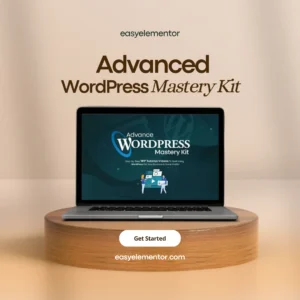
Advance WordPress Mastery Kit
Original price was: $ 27.00.$ 12.00Current price is: $ 12.00.

From Our Case Studies: Choosing the Right PLR Source
In our own research and in Reddit discussions, the happiest PLR buyers share two traits: they pick fewer, better providers, and they match the provider to their niche. Coaches rave about PLR.me and Tools for Motivation because the tone fits their audience. Tech‑leaning creators prefer Uthena and specialized PLR platforms for video courses.
We also see a pattern where smart sellers combine a PLR course from a focused provider with templates and site assets from a marketplace like EasyElementor. They use PLR for the teaching part, and EasyElementor‑style bundles to handle landing pages, checkouts, and brand visuals—especially when building on WordPress with Elementor and digital download plugins.
So our recommendation is simple: treat PLR course providers plus design/template marketplaces as a stack. Use each for what it does best, and don’t expect any single site to do everything.
How to Sell PLR Courses Online
Now let’s talk about turning your plr course business model into real revenue.
Sell on Your Own Website
This is the most flexible route. On your own site, you can:
- Use WordPress plus Easy Digital Downloads or WooCommerce for checkout, customized with Elementor‑style builders.
- Offer one‑off courses, bundles, and upsells.
- Integrate PayPal, Stripe, and local gateways for payments.
Here’s where EasyElementor‑type assets shine: you can quickly plug in professionally designed sales pages and funnels instead of hiring a designer from scratch.
Sell on Marketplaces
Some platforms or PLR course marketplaces let you upload resell online courses to their audiences. Examples include specialized PLR video course platforms like Uthena, or niche course directories.
Be careful: many mainstream marketplaces (like Udemy) either ban generic PLR or require such heavy customization that raw PLR no longer passes.
Create a Membership Site
Instead of selling each course separately, you can:
- Bundle multiple ready made courses to sell into a membership.
- Offer new PLR‑based content each month.
- Build recurring revenue rather than one‑off sales.
This model pairs well with WordPress membership plugins, Shopify memberships, or all‑in‑one platforms, and makes strong use of passive income courses.
Use PLR Courses as Lead Magnets
Not every PLR course needs to be sold directly. You can:
- Give away a short PLR mini‑course as a lead magnet.
- Use it as a bonus for buying a higher‑ticket offer.
- Break modules into free workshops that pitch a premium program.
This is especially effective when you want to grow your email list quickly without building content from scratch.
From Our Case Studies: A Simple Launch Plan and Timeline
From community stories and our own testing, a simple small launch plan for a PLR‑based course looks like this:
- Week 1–2: Choose a niche, buy one high‑quality PLR course, and apply the VFX rule—verify the license, freshen the content, cross‑reference with platform rules.
- Week 3–4: Customize the course, re‑record videos, add your own templates, and design a sales page using Elementor‑style templates and graphics from marketplaces like EasyElementor.
- Week 5: Set up checkout with Stripe and PayPal, connect email marketing (Mailerlite, ConvertKit, etc.), and run a soft launch to your existing audience.
- Week 6–8: Iterate based on feedback, add bonuses, test price points, and start running simple paid ads or partnership promos.
Reddit creators who follow a similar 6‑ to 8‑week path—rather than trying to rush everything in 3 days—tend to report better reviews, fewer refunds, and more stable revenue from their digital product business.
Learn more about: How to create online courses?
Learn more about: How to Make Money Online With PLR Courses
How Much Can You Charge for a PLR Course?
There’s no single correct plr course pricing formula, but we can use what we see in the market and from case studies as a guide.
Typical Pricing Ranges
In general:
- Short, niche courses: 15–49 USD
- Mid‑size, implementation‑heavy courses: 49–199 USD
- Large bundles or multi‑course programs: 199–997 USD+
PLR courses that are obviously generic usually do better at the lower end; heavily customized, well‑positioned courses can command higher prices, especially when sold as white label courses to professionals or agencies.
Bundle Pricing and Upsells
Because PLR makes it cheap to expand your library, you can:
- Sell a single course with a bundle upsell (e.g., “get 3 related courses for 50% more”).
- Use subscription models where buyers pay monthly for ongoing access to your course library.
Your tech stack—Shopify, WordPress, or a membership platform—will determine how easy it is to run order bumps and one‑click upsells using Stripe or PayPal.
From Our Case Studies: Pricing Lessons from the Field
Reddit threads about PLR pricing show an interesting split. Beginners often underprice heavily (7 or 9 USD courses) because they feel guilty charging more for “not 100% original” content. Experienced sellers remind them that buyers care more about outcomes than origin stories.
We also see strong results when sellers anchor PLR courses against clearly higher‑ticket offers. For example, bundling several customized PLR courses into a “digital academy” with community access and live calls allows prices in the mid‑three‑figure range, even though the raw material started as PLR.
The main lesson from our VFX‑style review is this: you don’t price based on how little you paid for the PLR. You price based on the transformation you deliver, how well you’ve customized the course, and how strong your brand and support structure are.
Real Business Ideas Using PLR Courses
You don’t need to be “the next big guru” to build a digital course business from PLR.
Online Coaching Business
Coaches can use PLR online courses as:
- Pre‑work for clients before sessions.
- Group coaching curriculum.
- Evergreen programs that run between live cohorts.
Digital Product Stores
You can build a digital product business with multiple small courses, ebooks, and template packs, all based on curated PLR and sold through Shopify or WordPress.
Niche Course Brands
Instead of teaching “marketing for everyone,” you can focus on narrow audiences—like yoga teachers, Etsy sellers, or VAs—and adapt PLR content so it speaks their language.
Membership Communities
Combine monthly new lessons (often PLR‑based), community forums, and live calls to build niche membership sites that deliver recurring revenue.
From Our Case Studies: Timelines for Growing a PLR‑Powered Business
From Reddit and long‑form PLR case studies, realistic growth timelines look roughly like this:
- Months 0–3: Launch your first one or two PLR‑based offers and learn the basics of traffic and conversion. Expect small but encouraging sales if you already have an audience.
- Months 3–6: Add more offers, refine your funnels, and test simple paid traffic. At this stage, some creators reach a few hundred dollars per month in profit.
- Months 6–12: With a consistent content strategy and a set of proven offers, a focused creator can turn PLR‑powered products into a full‑time digital entrepreneurship income, especially when combining courses, templates, and memberships.
The key from our VFX perspective is to keep verifying what works (sales data), freshening offers with updates, and cross‑referencing community feedback with your roadmap. That way, you’re not just reselling PLR; you’re building a durable brand.
Are PLR Courses Legal?
The short answer: yes, PLR courses are legal if you follow the license terms and general copyright law.
License Terms and Copyright
A PLR license is just a written permission from the copyright owner that says what you can and can’t do. As long as you stay within those terms, selling PLR‑based courses is allowed.
You still must:
- Avoid adding copyrighted material you don’t have rights to (e.g., movie clips, brand logos).
- Respect any restrictions on resale platforms, pricing, or passing on rights.
Platform Policies
Marketplaces and course platforms set their own rules. Some explicitly ban unedited PLR uploads; others require you to be the original creator or to provide proof of license. Always check their TOS before listing.
From Our Case Studies: Staying on the Right Side of the Law
Legal guides on MRR/PLR businesses highlight three “peace of mind” steps: thoroughly review your license, document your understanding, and educate your customers if you pass on any rights. Reddit stories back this up, showing that most legal problems come not from PLR itself, but from people reselling beyond what their license allowed.
In our VFX rule for legality, we:
- Verify: keep a copy of every PLR license and receipt.
- Freshen: revisit legal explainers yearly to stay updated on best practices.
- Cross‑reference: check platform rules (Udemy, Etsy, Shopify, etc.) before launching new offers.
Handled this way, are plr courses legal stops being a fear and becomes a simple compliance checklist you run every time you buy a new asset.
Frequently Asked Questions About PLR Courses
Below are 20 common plr course faq‑style questions with short, experience‑based answers.
1. What is a PLR course in one sentence?
A PLR course is a ready‑made online course you can edit, rebrand, and resell under a special license.
2. Do PLR courses need editing?
Technically, no—but in practice, yes. Unedited PLR looks generic and often performs poorly; editing is where you add real value.
3. Can you sell PLR courses on Etsy?
Sometimes. Etsy allows digital products, but you must follow both the PLR license and Etsy’s policies; check them carefully before listing.
4. Can you sell PLR courses on your own website?
Yes, that’s the most flexible and reliable option, especially using WordPress, Shopify, or membership platforms with Stripe and PayPal.
5. Are PLR courses profitable?
They can be, if you customize them, pick good niches, and treat them like real products with marketing and support.
6. Can multiple people sell the same PLR course?
Yes. PLR is non‑exclusive; many buyers get similar rights, which is why customization matters so much.
7. Are PLR courses allowed on Udemy or major marketplaces?
Usually not in raw form; they expect original content, so you must substantially change and re‑record material.
8. What is the difference between PLR and white label courses?
In practice, white label courses are a kind of PLR where branding is fully removable; the exact rights still depend on the license text.
9. Is PLR good for beginners in digital entrepreneurship?
Yes, if you’re willing to learn marketing and customization. It reduces content creation time but doesn’t remove the need for strategy.
10. How many PLR courses do I need to start?
One good, well‑chosen course is enough for your first launch. You can add more once you’ve validated your niche and funnel.
11. Should I mention that my course started as PLR?
You don’t have to, as long as the license allows rebranding, but you should be transparent about what students get and how you’ll support them.
12. What tools do I need to customize a PLR course?
At minimum: a slide editor (PowerPoint or Google Slides), a screen recorder, basic video editing, and a site or platform to host the course.
13. How do I make PLR content unique enough for SEO?
Rewrite key sections in your own words, add fresh examples, update outdated info, and include unique case studies or templates.
14. Can I use PLR courses as free lead magnets?
Yes, if your license allows giveaways; many sellers do this to grow their email list quickly.
15. Are PLR courses only for “make money online” niches?
Not at all. There are strong PLR catalogs in self‑help, productivity, health, parenting, and more.
16. How do I avoid low‑quality PLR?
Check sample lessons, look for providers known for smaller, curated catalogs, and read independent reviews or Reddit threads first.
17. Can I bundle multiple PLR courses into one big program?
Usually yes, but confirm your license allows combining products and reselling as a larger package.
18. How long does it take to launch my first PLR‑based course?
With focus, four to eight weeks is realistic: two for selection and editing, two to four for setup and launch.
19. What is a PLR course marketplace?
It’s a platform or site where you can buy, and sometimes resell, ready made online courses with PLR or related rights.
20. Is building a PLR course business still worth it in 2026?
Yes—if you lean into quality, niche positioning, and consistent marketing instead of chasing “get rich quick” PLR hype.
Final Thoughts: Should You Start a PLR Course Business?
If you’re a beginner looking to start a digital product business or an entrepreneur building passive income streams, PLR courses can give you a powerful head start—as long as you treat them like raw material, not finished masterpieces.
By following the VFX rule—Verify licenses, Freshen content, Cross‑reference platforms and feedback—and by using modern tools like WordPress, Shopify, Elementor‑style builders, Stripe, and PayPal, you can turn done for you courses into a trustworthy, scalable plr course business that actually serves your audience.
Sources:
- https://www.janets.org.uk/plr-course-licensing-explained-what-whitelabel-really-means/
- https://www.digitalproductsdp.com/blog/private-label-rights-in-digital-products
- https://uthena.com/blogs/tips/maximizing-profits-a-comprehensive-guide-to-selling-plr-video-courses
- https://www.linkedin.com/pulse/5-best-plr-course-sites-your-ultimate-guide-dfy-courses-paul-anderson-tb9lf
- https://www.legaldoer.com/blog-1/mrrandplrdigitalproducts
- https://www.reddit.com/r/systemeiotutorial/comments/19dpqlh/systeme_io_plr_review_how_to_make_money_with_done/
- https://www.reddit.com/r/Entrepreneur/comments/5wj6kf/plr_videos_courses_to_udemy/
- https://help.raket.ph/article/113-understanding-resell-rights-differentiating-mrr-plr-and-basic-resell-rights
- https://www.youtube.com/watch?v=sU3Vbfu-MTI
- https://uthena.com
- https://easydigitaldownloads.com/blog/edd-elementor-integration/
- https://www.digitalproductsdp.com/blog/difference-between-plr-and-mrr
- https://devulture.com.br/how-to-create-a-plr-course-fast
- https://www.youtube.com/watch?v=zIE0rGk6ruI
- https://marketinglegion.com/plr-vs-mrr-vs-resell-rights/