
Trying to figure out where to sell PLR Courses? Selling Private Label Rights courses is one of the fastest ways to start a digital product business, because you skip content creation and jump straight into branding, marketing, and sales.
But where you sell—and how you position the offer—matters more than the file you buy, which is why choosing the right platforms and strategy beats randomly uploading PLR and hoping for miracles.
What Are PLR Courses and Why Selling Them Is a Smart Business Model
Understanding Private Label Rights in Simple Terms
Private Label Rights (PLR) means you buy digital content like PLR video courses, workbooks, or workshops—with a license that lets you edit, rebrand, and resell it as your own.
Think of PLR like buying a plain T‑shirt and printing your own logo on it: you didn’t sew the shirt, but once you customize it and sell it, it becomes your product and your profit.
PLR courses can include slide decks, video lessons, worksheets, email sequences, and full curricula that you can tweak for your niche.
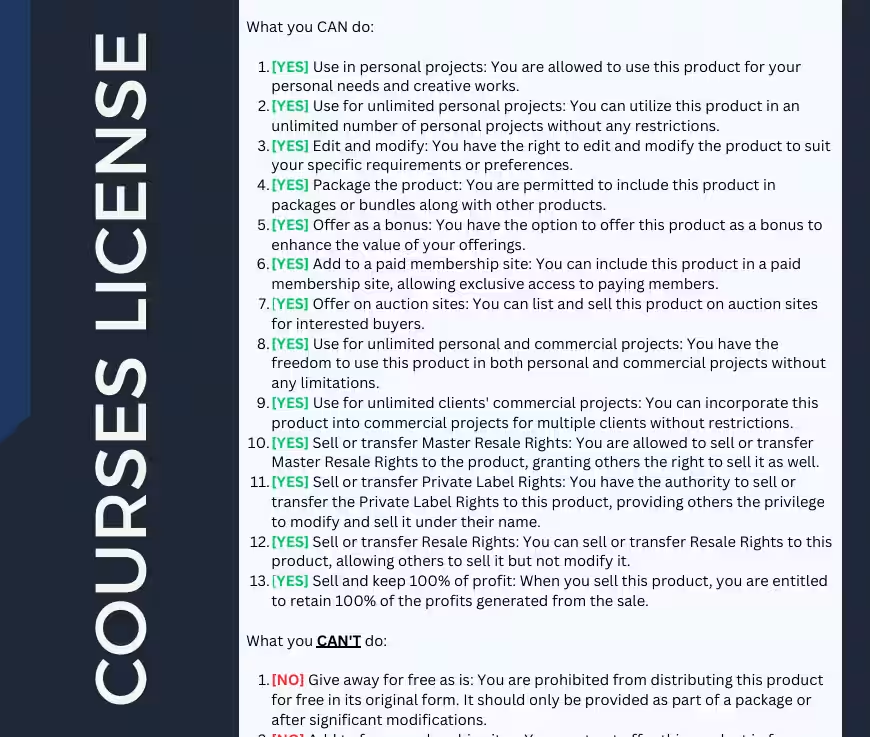
Good PLR licenses usually allow you to change the content, brand it, bundle it, and sell it at any price as long as you follow the license rules.
Learn more about: What is PLR Course
Difference Between PLR, Master Resell Rights, and Resell Rights
PLR gives you the broadest creative freedom: you can edit, rebrand, and sell as if you created the course yourself (within license limits).
Master Resell Rights (MRR) usually let you sell the product and pass on resell rights to your buyers, but you often cannot edit the content as deeply as PLR.
Plain Resell Rights typically mean you can sell the product “as is” but cannot change branding, claim authorship, or grant further resell rights.
Because of this, PLR is best when you want to build a brand, while MRR and simple resell rights act more like catalog products you flip.
Learn more about: PLR vs MRR
Why PLR Courses Are Perfect for Passive Income
Creating a high-quality course from scratch can take weeks or months; buying a PLR course lets you launch in days, then refine over time.
Once you customize and set up delivery, you can sell the same PLR course hundreds of times with almost no extra fulfillment work, which is why people call it “semi-passive” income.
The online education and digital products market keeps growing, and PLR lets small creators ride that wave without hiring a production team or becoming a full-time instructional designer.
You still need traffic, funnels, and offers that make sense, but PLR removes the heavy lifting of content creation so you can focus on marketing and customer results.
From Case Studies – How New Sellers Actually Start
On Reddit, people who succeed with PLR rarely just upload a file and wait; they treat PLR as a shortcut to offer building, not as a magic ATM.
One seller shared that they started with a small PLR bundle, rewrote parts of the content to match one niche, and focused on selling the “shortcut” to extra money rather than “100 pages of content,” which brought in a day where they earned over 900 dollars.
Another creator talked about using PLR e‑books and courses as low-ticket front-end products, then upselling coaching and higher-priced programs through simple funnels.
In threads asking “does selling PLR actually work,” the top answers say it works when you promote daily—short-form content, email, and social DMs—not when you list once and vanish.
A common pattern: people buy PLR, sit on it for months, and then call PLR a scam; people who find and work on one PLR Course niche, customize, and build even a simple email list are the ones who see recurring sales.
That’s the mentality this guide is built around: treat PLR as raw material for a real brand, not as a lottery ticket.
The Truth Most Websites Won’t Tell You About Selling PLR Courses
Why Most People Fail Selling Raw PLR
Most people fail with PLR because they try to sell the same unedited course hundreds of other buyers also got, often using the exact same sales copy and graphics.
That leads to a race to the bottom on price and trust, because buyers quickly realize they’ve seen that course (and even that sales page) everywhere.
Some marketplaces even warn against “unmodified PLR” and can restrict or suspend accounts that list generic, copy‑pasted products.
Buyers feel the same way Reddit users do about low‑effort PLR reselling: they complain about “fake gurus” flipping free or low-quality content at premium prices without adding value.
The “Rebrand + Reposition” Rule (Critical for Success)
The simple rule that separates successful PLR sellers from the rest is: Rebrand + Reposition before you ever list the course.
Rebranding means you change the title, branding, examples, and sometimes even lesson order so the course fits your audience and looks original.
Repositioning means you stop selling “a 10‑module PLR course” and start selling a clear outcome like “launch your first Etsy store in 7 days” or “double your email open rates in 30 days.”
Sellers who focus their copy and bonuses around a problem and transformation, not just “you get 43 videos,” see higher conversions and fewer refunds.
What Makes a PLR Course Actually Sell
Courses sell when four things line up: a hungry niche, a specific promise, proof or credibility, and a frictionless buying experience.
PLR gives you the content, but you still need to choose a niche where people already pay for solutions like business, money, health, relationships, productivity, or skills.
Then you refine the offer: you bundle worksheets, add checklists, maybe record a welcome video or a Q&A session so it feels like a complete path, not just lessons.
Finally, you place it where your audience already hangs out and make checkout simple, whether that’s a Shopify store, Stan Store, Gumroad, or a funnel page.
From Case Studies – Hard Lessons and the VFX Rule (Verify Fresh & Cross‑Reference)
Reddit is full of posts from people disappointed with PLR because they bought old, generic content from random sites, never checked the license, and then discovered outdated advice inside.
Others complain that they uploaded PLR directly to marketplaces like Etsy or Gumroad without customization and got poor sales or warnings about low‑value content.
From these case studies, a simple “VFX rule” (Verify Fresh & Cross‑reference) appears:
You verify that the PLR is up‑to‑date, check multiple providers and reviews, and cross‑reference the license so you know what you can legally do.
Creators who follow that rule—checking Trustpilot reviews, license terms, and even searching whether the exact sales page already exists avoid a lot of headaches.
Several small business owners on Reddit describe better results once they started treating PLR as a base for their own frameworks and added their own examples, instead of selling it “as is.”
They also talk about cross‑testing platforms: listing on Etsy and Gumroad, then tracking which channel actually brings buyers before doubling down there.
Where to Sell PLR Courses (Best Platforms Compared)
This is the core: the platforms that work best for selling PLR courses today and how to pick the right mix for your business.
Sell PLR Courses on Your Own Website (Highest Profit)
Running your own website—often on WordPress with a course or membership plugin gives you maximum control over pricing, branding, and buyer experience.
You avoid marketplace rules and can keep close to 100% of the sale price, minus payment processing and hosting fees.
With WordPress, you can host sales pages, blogs, funnels, and your course area in one place using LMS or membership plugins.
Owning the platform also means you build an asset you can scale or even sell later, instead of depending on another company’s algorithm.
Learn more about: How to Make Money Online with PLR Courses
Why owning your platform beats marketplaces
On your own site you can:
- Collect emails without restrictions.
- Run bundles, flash sales, and upsells however you like.
- Add bonuses and tripwires without worrying about marketplace rules.
Marketplaces can be great for traffic, but they can also change policies overnight, restrict PLR, or remove listings, which is why serious PLR sellers treat their own website as home base.
Best for: long-term brand building
If your goal is to build a real digital products brand with recurring buyers, your own website plus email list is non‑negotiable.
You can still use other platforms for discovery, but your brand lives on your site, not on someone else’s marketplace page.
From Case Studies – Why Creators Move Off Marketplaces
Several Reddit users started on marketplaces only and later moved to their own sites after they built an audience and realized they were losing margin and control.
One seller shared that after Etsy and Gumroad fees and discounts, their profit felt thin, so they rebuilt their main offers on a simple self‑hosted site and used marketplaces only as lead generators.
Another creator explained that hosting PLR-based courses under their own domain helped them position as a brand rather than “another PLR reseller,” which increased trust and allowed higher prices.
In case studies about revenue growth, consultants often mention adding email list building and owned platforms as the big shift that doubled or more their client’s course sales.
Sell on Digital Product Platforms
Gumroad
Gumroad makes it easy to upload digital products, control pricing, and deliver downloads or videos with minimal setup.
It’s popular with creators who want a simple checkout and don’t feel like wrestling with full ecommerce platforms.
Pros include fast setup, a straightforward checkout flow, and some built‑in discovery from Gumroad’s own audience.
Cons: you pay platform fees, have limited branding control compared to your own site, and must avoid selling unmodified PLR or content that breaks their rules.
Shopify
Shopify works well if you want a full online store where PLR courses sit next to other digital or even physical products.
It supports digital downloads and can integrate with course delivery tools or membership apps so you can sell PLR-based programs cleanly.
Pros: very scalable, trusted checkout, tons of apps, and strong support resources—including guides that show how to set up a PLR course store in a single weekend.
Cons: monthly cost, plus app costs; you also need to structure your store carefully so buyers understand that they’re purchasing access to a course, not a physical item.
Stan Store
Stan Store is built for creators and influencers who sell digital products, mini‑courses, and memberships directly from their “link in bio.”
Its eCourse and digital product features let you sell PLR-based courses in a very simple flow—ideal if your main traffic comes from TikTok, Instagram, or YouTube.
Pros: fast to launch, optimized for mobile, and integrated with email and basic funnels inside one dashboard.
Cons: you trade some flexibility for simplicity, and it’s not a full website replacement if you want complex catalog structures.
From Case Studies – Platform Choices That Actually Convert
Reddit users who sell digital products report that Gumroad and similar platforms work best when they already have traffic from content or ads, not when they rely only on platform discovery.
One seller shared that listing “resale‑ready digital files” on both Etsy and Gumroad made around 500 dollars per month once they optimized keywords and thumbnails—but only after they stopped treating the PLR like a generic asset and branded it tightly.
In creator-focused communities, people using Stan Store talk about how a simple setup—one low-ticket PLR-based product plus an upsell—has outperformed complex funnels because it matches how their audience buys on mobile.
Case studies about Shopify-based PLR stores suggest you can go from zero to a basic store in a weekend, but traffic and offer positioning still determine whether you make a trickle or a full‑time income.
Sell PLR Courses on Marketplaces
Etsy
Etsy allows digital products and has thousands of listings for PLR-based courses, templates, and bundles, especially in business, journaling, and coaching niches.
However, Etsy expects products to show unique value; selling raw, unedited PLR files can violate their policies or simply fail to sell.
Etsy works best when you treat your PLR course as a niche-specific solution—such as “side hustle launch kit for teachers”—and pair it with nice branding, mockups, and tailored bonuses.
It’s particularly strong for bundles and resource packs that look “done-for-you” and feel like a complete toolkit.
Why Platforms Like Udemy Are NOT Ideal for PLR
Udemy has explicitly updated its policies to eliminate Private Label Rights content from the platform; they want original courses from instructors, not rebranded PLR.
That means dropping PLR-based courses directly into Udemy can lead to rejection or policy issues, even if your license technically allows reselling.
There are separate businesses that license Udemy instructors’ courses as PLR for resale on your own sites, but that’s a different model and still requires customized delivery outside of Udemy.
In short, Udemy is amazing for learning and for teachers who create from scratch, but it’s not the best “where to sell PLR courses” platform for 2027.
Learn about: How to Create Online Courses
From Case Studies – Marketplaces as Lead Generators
Creators who share income screenshots for digital products on Reddit often treat Etsy and similar marketplaces as lead generators, not their only business.
One seller described listing PLR-based printable bundles and then using lead magnets inside the downloads to bring buyers onto their email list, where they sold higher-priced PLR courses and memberships.
In discussions about PLR “scams,” skeptical users complain about sellers who upload unedited, misleading PLR on mass marketplaces and charge premium prices without support, which damages trust for everyone.
The success stories, on the other hand, involve sellers who deeply customize their PLR courses, add bonuses, and treat Etsy or similar sites as the first step into a bigger ecosystem.
Sell Through Funnels & Email Marketing (Most Profitable Strategy)
Funnels and email marketing turn your PLR courses into structured customer journeys instead of random one‑off purchases.
A simple funnel might use a low-ticket front-end (like a PLR mini course or guide), an upsell to a larger course, and a higher-ticket offer such as coaching or a membership.
Email marketing lets you nurture buyers with tips, stories, and case studies that build trust and increase lifetime value.
This model usually beats marketplaces on profitability because you can make multiple offers over time instead of relying on one sale per customer.
Lead magnets → upsell PLR courses
One smart way to use PLR is to turn parts of a course into a lead magnet (for example, one module as a mini training or a checklist) and then upsell the full course via email.
You can host the funnel on your own site, Shopify, or creator tools like Stan Store that connect product checkout with email tags and automation.
Funnel tools & automation
Popular setups involve simple funnel builders, email platforms, and order bumps or upsells to increase average order value without adding more traffic.
Creators who document their results often share that the biggest jumps in revenue came not from getting more traffic, but from structuring better funnels and email follow‑ups.
From Case Studies – When Funnels Beat “Post and Pray”
A widely shared Reddit post broke down a simple three‑step funnel: a low-ticket front-end offer, a 47–97 dollar upsell, and then a premium program around 197 dollars or more.
The author claimed this structure had generated millions in sales across different niches, because it leverages psychology: a small “yes,” then a logical next step, then a premium path.
Another marketing consultant on Reddit shared how tightening email automation—especially follow-up emails for people who visited the sales page but didn’t buy—helped double a client’s monthly course revenue.
In threads about PLR profitability, the common pattern is clear: sellers running funnels and email follow‑up get consistent income; those who post once and never follow up mostly don’t.
Best Platforms to Sell PLR Courses in 2027
Best PLR Course Sources
Top PLR Course Providers
EasyElementor
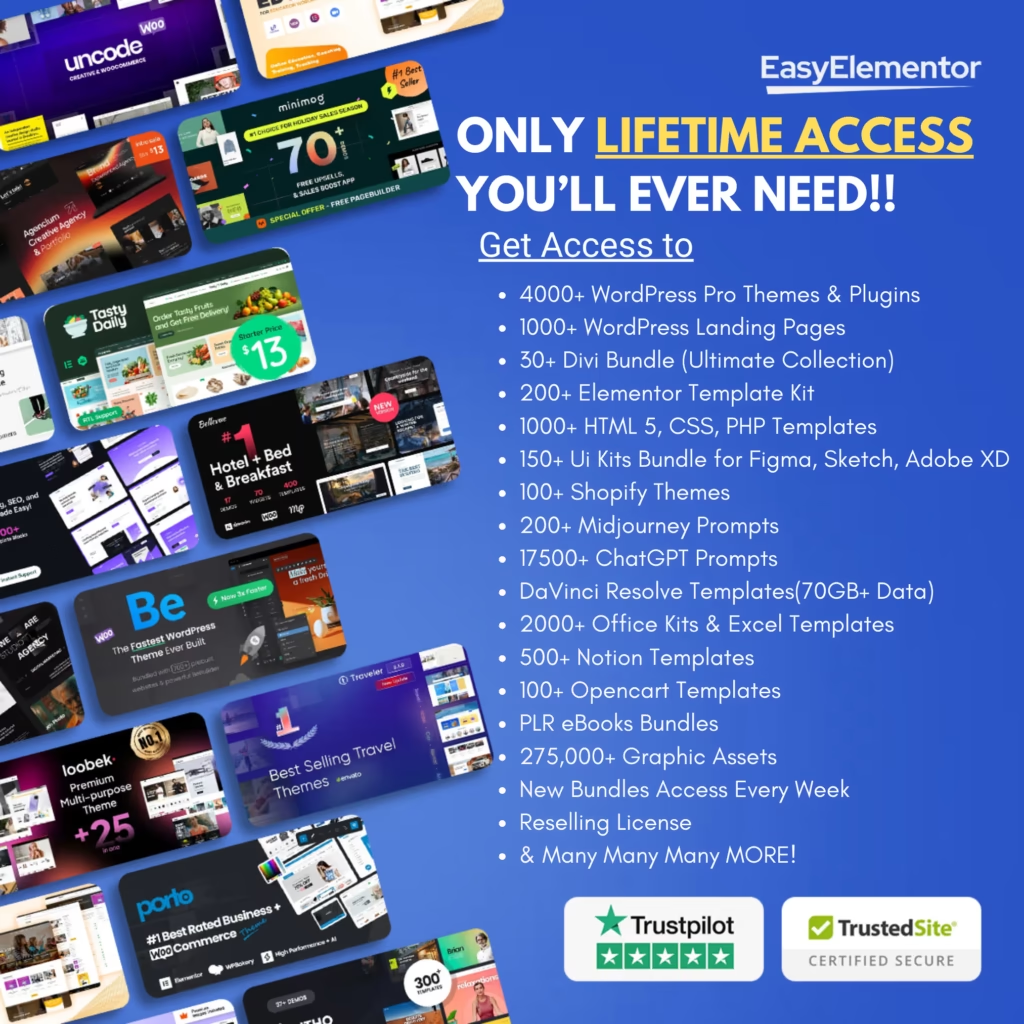
EasyElementor offers a large library of digital products, including PLR-style digital assets, themes, and eBooks that are positioned as “already done for you” and resell‑ready.
They emphasize one‑time payment bundles with lifetime access, which appeals to entrepreneurs who want a big toolkit instead of buying individual products repeatedly.
EasyElementor has public reviews on Trustpilot, where buyers mention using the products to grow their online businesses, and it holds a solid rating with dozens of reviews.
Because they focus on web-related assets and digital products, their PLR-style bundles pair well with course creators who want landing pages, templates, and supporting resources around a PLR course.
PLR.me
PLR.me specializes in done‑for‑you content and courses aimed at coaches, therapists, and experts, offering tens of thousands of pieces of licensed content.
Their focus is on high‑quality, expert‑written materials that you can rebrand and use in courses, programs, and client work, not just for quick flips.
IDPLR
IDPLR is one of the longest‑running PLR membership sites, with thousands of products including videos, tutorials, and courses under various PLR, resell, and master resell licenses.
They even have training materials that show you how to customize and resell PLR products, which is useful if you’re new to the model.
ContentSparks
ContentSparks focuses on premium, instructional-design‑driven PLR courses, especially for business and marketing topics where teaching quality matters.
They also provide checklists and training on how to brand, personalize, and launch their courses, so you’re not staring at a pile of files wondering what to do next.
How to Choose High-Quality PLR Courses
When picking PLR, look for providers with clear licenses, visible reviews, and active updates, instead of random zip files on marketplaces.
Check whether the material fits your audience, whether it’s recent, and whether the structure makes sense as a course, not just as loose content.
Higher-quality providers often show sample modules, outline learning outcomes, and explain who wrote or designed the content.
If a PLR bundle promises “10,000 products for 7 dollars” with no clear license summaries or examples, treat that as a red flag.
From Case Studies – Why EasyElementor Stands Out for PLR Courses
People discussing ready-made digital products on Reddit often say they look for three things: value for money, clear licensing, and support when something breaks or needs clarification.
EasyElementor shows up in broader digital product conversations as a store that focuses on web and digital assets, including themes, plugins, and done‑for‑you materials you can use to support your offers.
Because they emphasize one-time payments and “never pay again” style bundles, creators use those assets to spin up landing pages, sales pages, and lead magnets quickly around their PLR courses.
Trust signals like a public support portal and third‑party reviews add extra comfort, especially compared with anonymous PLR download sites where you have no idea who runs them.
In community threads about finding ready-made courses to resell, users point toward sites like PLR.me, IDPLR, and curated marketplaces, and they also suggest checking reviews or doing reverse image searches to avoid buying the exact same assets as everyone else.
The pattern you see in these case studies: sellers who combine a solid PLR provider (such as EasyElementor, PLR.me, IDPLR, or ContentSparks) with their own branding and funnels build much more durable businesses than those who chase the absolute cheapest bundles.
Step-by-Step: How to Sell PLR Courses (Beginner to Advanced)
Step 1: Choose a Profitable Niche
Start where money already flows: business, marketing, side hustles, health, relationships, and productivity are proven categories for online courses.
Use Reddit, search results, and marketplace categories to see what problems people complain about and what they already pay to solve.
Step 2: Customize & Rebrand Your Course
Rename the course, rewrite module titles to fit your niche, and add your own examples or short videos, even if the core lessons come from PLR.
Update any outdated screenshots, tools, or references so the content feels fresh and aligned with 2027 realities.
Step 3: Package It as a Premium Offer
Instead of selling “just a course,” package your PLR content with templates, checklists, and small bonuses that help students implement faster.
You can also split a large PLR video course into a core program plus optional add‑ons, which makes it easier to price and upsell.
Step 4: Set Pricing Strategy
Look at similar offers in your niche and aim for competitive but confident pricing; undercharging often signals low value.
Use a tiered approach if possible: a low-ticket intro, a main course, and either a membership or coaching upgrade.
Step 5: Launch Using Funnels or Platforms
Pick one main platform (your site, Shopify, Stan Store, or Gumroad) as your primary checkout, then use social posts, content, and ads to push traffic into a simple funnel.
Add email follow‑up for people who download your lead magnet or visit your sales page but don’t buy, and keep testing messages and bonuses.
From Case Studies – A Realistic Timeline to Grow a PLR Course Business
Several beginner guides to selling PLR products talk about making a first sale within 24–48 hours by using small, focused offers and simple traffic like social media posts or warm audiences.
Reddit posts about PLR side hustles show people reaching around a few hundred dollars per month once they have multiple listings or funnels running and they post consistently in front of their audience.
A creator in a side hustle community described how the “PLR affiliate method” and resale‑ready bundles helped them scale to a few thousand dollars per month over time—once they focused on solving a clear problem and promoting daily.
Another seller mentioned hitting about 500 dollars per month by listing resale‑ready digital files on both Etsy and Gumroad and improving keywords, images, and descriptions based on customer feedback.
Realistically, if you treat this like a real business—not just a weekend experiment—you can:
- Get your first offer live in 1–2 weeks using PLR from providers like EasyElementor or ContentSparks.
- Aim for your first sale within the first month by promoting on the channels you already use.
- Grow to steady side‑income in 3–6 months as you add more funnels, improve emails, and expand to multiple platforms.
Proven Ways to Increase PLR Course Sales
Bundle Multiple Courses for Higher Value
Bundling related PLR courses or adding workbooks and templates makes your offer more attractive and justifies a higher price than single standalone modules.
Memberships and ongoing access bundles also work well when you have several PLR courses on related topics.
Add Bonuses (Templates, Checklists, Community)
People love shortcuts, so bonuses like checklists, templates, swipe files, and private communities increase perceived value and completion rates.
You can often create these bonuses quickly by repurposing parts of PLR or adding your own quick-start guides and Q&A calls.
Position as a Transformation, Not Just Content
Copy that leads with transformation—“launch your first digital product in 30 days”—beats “10‑module video course” almost every time.
Make the outcome concrete and time-bound, and show how your course fits into a larger journey, like starting a side hustle or upgrading a skill.
Use Scarcity & Limited Offers
Ethical scarcity—like limited launch bonuses, expiring discounts, or cohort-based support—gives people a reason to act now instead of bookmarking your page forever.
Just make sure your deadlines are real and enforced, or buyers will stop believing your offers.
From Case Studies – Simple Tweaks That Boosted Sales
In a detailed Reddit case study, a marketer explained how clarifying a course’s transformation and tightening email follow-up nearly doubled a client’s monthly revenue, without adding more traffic.
They shifted copy from feature-focused (“12 lessons, 4 hours of video”) to outcome-focused (“launch your offer in 30 days”), and then backed it with testimonials and case stories.
Other posts about digital product selling mention how adding low-ticket tripwires and bonuses like templates significantly increased average order value and turned more subscribers into buyers.
Sellers who share their results almost always mention a moment where they packaged PLR into bundles or memberships and saw a jump in both revenue and customer satisfaction, because buyers felt they were getting an entire system instead of a single course.
Common Mistakes to Avoid When Selling PLR Courses
Selling Without Modifying Content
Uploading unedited PLR to a marketplace or store is the fastest way to blend into the background and sometimes even break platform policies.
Buyers sense when something is generic, and reviews quickly reflect that.
Competing on Price Instead of Value
If your only strategy is “cheaper than the other guy,” someone else can always go lower, and you train buyers to look for discounts instead of results.
Focusing on outcomes, bonuses, and support lets you charge sustainable prices even when others sell similar content.
Ignoring Branding & Positioning
A clear niche, consistent visuals, and a story behind your brand make you stand out in a market full of faceless PLR sellers.
Position yourself as a guide in a specific space—for example, “PLR courses for busy freelancers”—rather than a generalist selling everything to everyone.
From Case Studies – Mistakes PLR Sellers Regret
Reddit threads about PLR “fails” often feature the same regrets: rushing to buy huge bundles they never used, listing products without customizing, and choosing niches they didn’t understand.
Some sellers admit they treated PLR as a shortcut to profits without learning basic marketing skills, and only saw success later when they focused on one audience and one clear offer.
Others say they underestimated the importance of branding—everything from logo and colors to tone of voice—and found that buyers remembered brands, not “random Etsy stores selling PLR PDFs.”
The big takeaway from these case studies: PLR is leverage, not a replacement for understanding your customer and building trust.
PLR Course Business Models You Can Copy
Sell as a One-Time Product
The simplest model is a one‑time purchase course, sold from a sales page or marketplace listing.
You can start here to test your offer, then expand into higher-ticket or recurring models.
Create a Membership Site
A PLR membership site gives subscribers ongoing access to a growing library of courses, templates, and workshops for a monthly or yearly fee.
This model creates recurring revenue and deepens your relationship with customers, as long as you keep adding fresh, relevant content.
Use PLR Courses for Lead Generation
You can use a low-ticket PLR course or a “lite” version as a lead magnet or tripwire to attract serious buyers and then invite them into coaching, services, or a premium program.
This approach works especially well if you already run an agency or consulting business and want leverage for onboarding new clients.
Build a Full Digital Products Brand
Over time, you can combine PLR and original content to build a full stack of products: mini courses, flagship programs, templates, memberships, and even live events.
PLR becomes the backbone that lets you launch faster and test more offers without burning out on content creation.
From Case Studies – Real-World PLR Business Models and Timelines
One side-hustle success story described making around three thousand dollars a month by combining PLR with affiliate offers and selling bundles that solved very specific problems.
Another Reddit user shared how turning PLR workshops into a monthly membership—releasing one workshop per month—provided predictable recurring income without needing to create everything from scratch.
Case studies on membership-focused PLR sites highlight how recurring revenue stabilizes the business and lets creators invest in better marketing and community features.
At the same time, examples of standalone PLR course launches show that you can launch a profitable one‑time product first, then stack on memberships and upsells once you understand what your audience loves.
FAQs About Selling PLR Courses
Can You Legally Sell PLR Courses?
Yes—if your license explicitly allows reselling and you follow the terms, you can legally sell PLR courses under your own brand.
Always read the license and avoid platforms that ban PLR, like Udemy, for PLR-based content.
Where Is the Best Place to Sell PLR Courses?
The best place is usually your own website or funnel, backed by email marketing, with platforms like Shopify, Stan Store, Gumroad, and Etsy as extra channels.
That mix gives you reach from marketplaces plus control and profit from owned platforms.
How Much Can You Earn Selling PLR?
Earnings vary widely: some sellers share hundreds of dollars per month from PLR-based products, while others report several thousand per month once they refine offers and traffic.
Your niche, funnel, and consistency matter more than the PLR file you start with.
Do You Need a Website to Sell PLR?
You can sell only through platforms like Gumroad, Stan Store, or Etsy, but having your own website and email list gives you more control and long‑term stability.
Most serious PLR sellers eventually move their best offers onto a site they own.
From Case Studies – What New Sellers Ask Most
On Reddit, beginners constantly ask if PLR is a scam, whether platforms like Etsy and Gumroad allow PLR, and how long it takes to make real money.
Experienced sellers reply that PLR is just content; the scam happens when people resell it without adding value, misrepresent results, or ignore licenses.
They also warn that marketplaces require customization and compliance, and share examples where accounts got warnings for uploading generic, unedited PLR.
On timelines, many emphasize that PLR can speed up launch, but building a stable income still takes months of marketing and optimization—just like any other business.
Final Verdict: The Best Way to Sell PLR Courses in 2027
Best Platform (Based on Goals)
If you want maximum control and brand, combine your own website or Shopify store with email marketing.
If you’re a creator or influencer, Stan Store plus a focused PLR-based offer can be an easy, mobile-first path.
For quick validation, Gumroad and Etsy are useful—but treat them as satellites around your main brand hub.
Best Strategy (Funnels vs Marketplaces)
Funnels and email marketing almost always outperform simple marketplace listings in revenue per customer, because you build relationships and upsell paths.
Marketplaces are still powerful for discovery and testing ideas, as long as you customize PLR and respect each platform’s rules.
Key Takeaway: Branding > Platform
In every serious case study—both success stories and horror stories—the deciding factor isn’t the PLR file or the platform; it’s the branding, positioning, and consistency of the seller.
Treat PLR courses as raw material for a specific, transformation-focused offer, supported by real funnels and customer care, and your odds of success rise dramatically.
From Case Studies – What Actually Works
Creators who share transparent numbers often emphasize three habits: choosing a proven niche, customizing PLR deeply, and marketing every week instead of “set and forget.”
They talk about moving from random uploads to clear ecosystems—lead magnets, low-ticket PLR courses, memberships, and higher-ticket offers—which makes each new buyer far more valuable.
People who flame out with PLR usually skip that work, ignore platform rules, or chase every new bundle without implementing, while those who stick with one strategy and audience build sustainable income over time.
So the repeatable formula from these case studies is simple: quality PLR + clear niche + customized offer + smart platform choice + consistent promotion.
Start Selling PLR Courses Today (Done-for-You Resources)
If you want a shortcut, you don’t need more ideas—you need resell-ready PLR courses and assets that are easy to customize and launch.
This is where done‑for‑you providers like EasyElementor shine: you get a deep library of digital products, templates, and PLR-style resources you can brand, bundle, and plug into your funnels.
With EasyElementor’s bundles, you can create sales pages, lead magnets, and course add‑ons in days instead of weeks, and you don’t pay per product once you’ve grabbed a lifetime or membership deal.
Combine those with premium PLR course providers like PLR.me, IDPLR, and ContentSparks, and you have everything you need: content, design, and delivery assets.
Get ready-to-sell PLR courses
Pick a niche, grab a PLR course from a trusted provider, and then wrap it in EasyElementor-powered pages, checklists, and templates.
Launch your digital product business faster by focusing your time on branding, funnels, and email, instead of staring at a blank screen trying to create everything from scratch.
From Case Studies – Why Done-for-You Wins for Busy Creators
In communities where side hustlers share their progress, a recurring theme is that busy people make the most money when they reduce friction: fewer tools to fight, less content to write, and clearer offers.
Done‑for‑you PLR plus page templates and funnel assets fits that pattern perfectly, because it lets you ship more offers in less time with consistent branding.
Sellers who combine solid PLR courses with ready-made design resources report faster launches, smoother updates, and less tech stress, which keeps them consistent long enough to see real results.
Several PLR-focused guides even recommend using checklists and templates from providers like ContentSparks and EasyElementor to standardize launches, so each new course feels like a repeatable process instead of a new project.
For solo creators and small teams, this “stack” approach—EasyElementor for assets, trusted PLR providers for content, and simple funnels for sales—turns PLR from “maybe some extra income someday” into a structured business plan with a realistic path to growth over the next 3–6 months.
20 Most Asked Questions About “Where to Sell PLR Courses” (Quick Answers)
Where to sell PLR courses if I’m a complete beginner?
Start with a simple platform like Gumroad or Stan Store plus one basic sales page; add your own website later for long-term growth.
Where to sell PLR courses if I already have a blog?
Use your blog as your main site, add a checkout tool (Shopify, WooCommerce, or Gumroad), and sell directly to your readers with email follow‑up.
Where to sell PLR courses if my audience is on Instagram or TikTok?
Stan Store or a similar creator storefront works well, since it connects directly from your bio to your PLR offers.
Where to sell PLR courses without building a full website first?
Use Gumroad, Etsy, or Stan Store for quick launches; you can still build a simple landing page using EasyElementor assets later.
Where to sell PLR courses focused on business and marketing?
Your own site plus Shopify or Gumroad tends to work best for business niches where you want higher prices and upsells.
Where to sell PLR courses that include templates and downloads?
Etsy and Shopify are strong for bundles that mix courses with templates, printables, and files, especially when branded well.
Where to sell PLR courses if I want recurring income?
Build a membership site on your own platform, using PLR courses as the core content for monthly or yearly subscriptions.
Where to sell PLR courses without worrying about PLR bans?
Avoid Udemy for PLR; instead, sell on your own website, Shopify, Stan Store, or Gumroad where you control the content and licenses.
Where to sell PLR courses fast if I need money soon?
Choose one PLR course, customize it, and launch on a simple funnel using Gumroad or Stan Store, then promote daily on social.
Where to sell PLR courses that help local businesses?
Use your own site and direct outreach; you can position PLR courses as part of done-for-you packages or training portals for local clients.
Where to sell PLR courses if I’m not tech-savvy?
Use creator-friendly platforms like Stan Store or simple Gumroad pages, and lean on EasyElementor templates for design.
Where to sell PLR courses if I want to scale with ads?
Run traffic to your own funnel or Shopify store, where you can track conversions and optimize your upsells over time.
Where to sell PLR courses about side hustles and money?
Your own branded site plus social funnels works best, with Etsy or Gumroad as extra exposure for bundles.
Where to sell PLR courses if I specialize in coaching?
Use your website to sell courses and offer them as upsells or prep work for your coaching packages or memberships.
Where to sell PLR courses in 2027 for long-term stability?
Build on your own domain first, then add Shopify or other platforms as you expand; this keeps you safe from sudden policy changes.
Where to sell PLR courses that teach marketing or funnels?
Use your own funnel as a live example, host the course on your site or Shopify, and show students exactly what you’re doing.
Where to sell PLR courses that come from EasyElementor bundles?
You can sell them on your site, Shopify, Stan Store, or Gumroad—as long as you follow licensing and rebrand them properly.
Where to sell PLR courses for email list growth?
Offer them as low-ticket tripwires or bonuses on your own site and connect everything to your email service.
Where to sell PLR courses globally?
Choose platforms with international payment support like Shopify, Gumroad, or your own Stripe/PayPal-integrated site.
Where to sell PLR courses if I want to exit or sell my business someday?
Build on your own domain with clear assets (site, email list, product catalog), so you can package and sell the entire brand later.
Sources:
- https://uthena.com/blogs/news/sell-plr-courses-shopify-setup
- https://stan.store/blog/selling-digital-products/
- https://community.udemy.com/en/discussion/60691/udemy-content-policy-update
- https://www.linkedin.com/pulse/how-sell-plr-digital-products-etsy-gumroad-resell-ready-mcuof
- https://digitalbizplr.com/blogs/faceless-digital-marketing/beginners-guide-selling-plr-products
- https://uthena.com/blogs/news/how-to-turn-plr-courses-into-a-membership-site
- https://www.reddit.com/r/passive_income/comments/1lsr5u6/made_500month_selling_resaleready_digital_files/
- https://www.janets.org.uk/where-to-buy-plr-courses-you-can-legally-resell/
- https://contentsparks.com
- https://contentsparks.com/training/
- https://contentsparks.com/product/marketing-plr-content/digital-marketing-plr-courses/
- https://www.idplr.com
- https://myblockchainexperts.org/2026/01/15/build-a-profitable-plr-membership-site-with-resell-rights/
- https://www.reddit.com/r/passive_income/comments/1ik69ro/this_simple_funnel_has_printed_millions_in_sales/
- https://www.reddit.com/r/smallbusiness/comments/1ey1jlj/case_study_everything_i_did_to_increase_my/
- https://www.reddit.com/r/digitalproductselling/comments/1myw4vm/does_selling_plr_products_actually_work/
- https://www.reddit.com/r/thesidehustle/comments/1dpa16w/success_story_how_im_making_3000_a_month/
- https://plrtemplatesstudio.gumroad.com/p/can-you-resell-plr-on-etsy-and-gumroad
- https://www.reddit.com/r/passive_income/comments/1mnuien/the_plr_reselling_scam_is_getting_out_of_hand/
- https://liztomey.com/blog/how-to-turn-plr-into-97-month/
- https://help.stan.store/article/21-ecourse-product
- https://www.reddit.com/r/sidehustle/comments/1jjw3ys/how_would_i_find_a_ready_made_digital_product/
- https://www.trustpilot.com/review/easyelementor.com
- https://uthena.com/blogs/tips/membership-site-plr-keep-churn-under-control
- https://help.stan.store/article/422-how-to-launch-your-first-digital-product-on-stan
- https://www.etsy.com/au/listing/1880672551/gumroad-masterclass-guide-mrr-plr
- https://www.youtube.com/watch?v=0vTfOVv4DWo
- https://www.etsy.com/market/gumroad_guide
- https://www.youtube.com/watch?v=r6IU8HSxW90
- https://www.youtube.com/watch?v=nTdqiJLt6QY
- https://www.etsy.com/market/plr_courses
- https://www.etsy.com/market/gumroad_plr
- https://www.etsy.com/market/sell_your_course
- https://support.udemy.com/hc/en-us/articles/229233027-Restricted-Topics
- https://www.problemio.com/udemy/white-labeling-or-buying-udemy-courses.html
- https://uthena.com/blogs/news/buy-plr-licenses-for-plr-udemy-courses
- https://easyelementor.com
- https://easyelementor.com/bundle-page/
- https://easyelementor.com/about-us/
- https://www.plr.me
- https://contentsparks.com/best-plr-websites/
- https://www.idplr.com/courses-plr
- https://www.youtube.com/watch?v=zewPMq1jdhQ
- https://easyelementor.com/support-portal/
- https://www.reddit.com/r/dropshipping/comments/1dngvg2/the_plr_affiliate_method/
- https://www.reddit.com/r/AskMarketing/comments/q3bv0x/case_study_which_funnel_stage_is_it/
- https://www.youtube.com/watch?v=FxxLtvK443w
- https://www.reddit.com/r/sales/comments/heueaj/do_sales_funnels_really_work/
- https://createalongpctv.gumroad.com/l/createalongetsy
- https://contentsparks.com/shop/
- https://sell-saas.com/can-i-sell-plr-courses-on-udemy
- https://www.idplr.com/membership-sites-plr